+91 799 591 7995
Mon - Sat: 9:00am to 6:00pm

4th floor, ARD MAGNUM, Green Hills Road, Moosapet, Kukatpally, Hyderabad
+91 799 591 7995
Mon - Sat: 9:00am to 6:00pm
4th floor, ARD MAGNUM, Green Hills Road, Moosapet, Kukatpally, Hyderabad



Children younger than five years are vulnerable to serious eye complications. They cannot express their discomfort, so they should be taken for an extensive eye check-up periodically. For example, conditions such as Refractive Error and Amblyopia often go unnoticed and become serious problems later if they are not detected at an early stage. Especially in children with a family history of Ophthalmological conditions, parents should watch out for signs indicating that the child is undergoing some discomfort in the eyes.
Pediatric Ophthalmology services at Think Eye provide exceptional and compassionate care to children irrespective of whether the disorder is simple or complex. The department is equipped with state-of-the-art medical technology and devices to detect and treat any kind of eye condition. Our doctors are well trained and experienced enough to provide the best possible outcome for your little one.
This condition is also called Lazy eyes. A child with this condition has reduced vision in a single eye due to abnormalities in visual development during development years. Strabismus, drooping eyelids, refractive errors, or cataracts are some of the causes of this condition.
It is the condition of cataracts in children resulting from the opacification of the lens in the eye, leading to blurred vision. It can be cured when diagnosed and managed at the early stages. A delay can lead to total blindness too. It can be treated through surgery, and proper postoperative measures should be followed to restore the vision.
This condition involves vision problems that relate to the nervous system. For example, loss of eyesight due to injury in the brain or optic nerves transmitting visual signals to the brain. The treatment depends on the condition, symptoms that range from double vision, drooping eyelids, headache to defects in the visual area.
This includes several eye disorders and several rare diseases caused by factors like genetics, trauma, infection, or other conditions like Sicxle cell disease, Retinopathy of Prematurity, Uveitis, Retinoblastoma, Coat's disease, Infectious retinal diseases, and much more.
It is the opacification of the cornea in the child. The cornea allows the light to enter the eye and reach the retina. So, corneal disorders can lead to vision loss. Treatment for this condition includes keratoprostheasis, which involves the placement of an artificial cornea through surgery.
This surgery is a reconstructive surgery where the facial tissues and the tissues surrounding the orbit of the eye are repaired for the proper functioning of the eyes or improving external appearance.
In this condition, the child experiences blurred vision because the shape of the eye blocks the light from focusing correctly on the retina. It can be managed with the help of eyeglasses, contact lenses. Sometimes the ophthalmologist might recommend refractive surgery.
This condition is the result of the reaction of the eye to a particular irritant or allergen. Red, swollen, and itchy eyes are its characteristics. It is treated using artificial tears, oral antihistamines, allergy shots (immunotherapy), and corticosteroids.
A pediatric ophthalmologist is a doctor who specializes in diagnosing and treating eye problems in babies, children and teenagers. They manage conditions like refractive errors (vision problems), lazy eye (amblyopia), squint (strabismus) and even childhood cataracts. They use child-friendly methods to examine the eyes and provide treatments that suit a child’s age and comfort.
You should consider a visit if your child squints often, rubs their eyes frequently, sits very close to screens or if you notice one eye turning inward or outward. It’s also a good idea to schedule routine eye check-ups, especially if there’s a family history of eye problems or if your child was born prematurely.
Early treatment is crucial because a child’s vision is still developing. Conditions like lazy eye and pediatric cataracts can lead to permanent vision problems if not treated in time. Treatments such as glasses, eye patching or surgery help the brain learn to use the eye properly and improve long-term vision.
Pediatric eye care is specially designed for children. Doctors use tests and tools that don’t rely on the child reading or clearly describing what they see. They also focus on conditions that are more common in children, like strabismus, amblyopia and retinopathy of prematurity, which are less common in adults.
Children of all ages from newborns to teenagers can benefit, especially those with vision issues, eye misalignment, frequent infections, excessive watering or other eye-related concerns. Pediatric specialists can handle everything from simple vision correction to more complex eye conditions.
Our specialists at Thinkeye have treated over 35000+ patients and we have gained tens of thousands of loyal brand ambassadors over the decades. Listen to what our brand ambassadors have to say about our services…
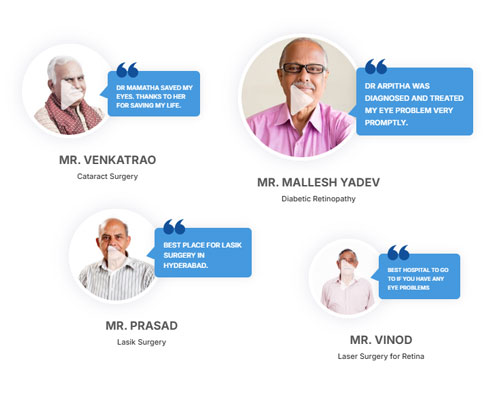
I had the great experience with ThinkEye Hospitals. My father had laser cataract surgery without complication. Dr. Mamatha took good efforts to explain the procedure and everything is transparent. Friendly staff and...
I went for a second opinion to thinkeye... My initial though was to get a second opinion and go back to the first doctor for surgery. But Dr mamatha captured my trust...