+91 799 591 7995
Mon - Sat: 9:00am to 6:00pm

4th floor, ARD MAGNUM, Green Hills Road, Moosapet, Kukatpally, Hyderabad
+91 799 591 7995
Mon - Sat: 9:00am to 6:00pm
4th floor, ARD MAGNUM, Green Hills Road, Moosapet, Kukatpally, Hyderabad

Think Eye offers advanced LASIK surgery in Hyderabad. Our LASIK specialists pioneered the art of LASIK surgery.
We offer customised LASIK solutions to fit your needs.



LASIK or Laser-Assisted In-Situ Keratomileusis is a minimally invasive surgical procedure performed to correct several refractive error conditions. It is a laser vision correction procedure that reshapes the cornea’s curvature to correct the refractive index of the natural lens in the patient’s eyes.
An ideal candidate for this surgery should be above 18 years and have a stable spectacles power for a year. This surgery is suitable for candidates who want to ditch their glasses and artificial lenses for good with a naturally corrected vision.
While the primary objective of a LASIK surgery is to make the refractive error zero, it isn’t always the case. However, a successful surgery will enable the patients to have a completely clear vision without wearing glasses or lenses.
LASIK surgery is primarily performed to treat refractive errors in the patient. So, the surgery can treat:
All of these conditions are easily treatable with LASIK surgery if done the right way and under the guidance of an experienced ophthalmologist.
You can consider undergoing LASIK surgery if:
You are an ideal candidate for LASIK surgery if:
You might consider undergoing LASIK surgery after your consulting ophthalmologist recommends a corrective vision procedure following a regular eye examination. However, the procedure is not as simple as it seems.
LASIK surgery is done as outpatient surgery, which means that it doesn't involve hospitalization. You can check in to the hospital a few hours before the surgery and have someone take you back home an hour after the surgery is done.
The surgeon generally uses topical anesthesia to numb the part of the eye that will be operated on. The patient is made to sit on a chair, following which a microscope emitting green light is focused on their eye. The suction ring fades out the vision of the patient. Once the surgery is completed, the doctor will remove the suction ring to restore the vision in the eye.
The procedure is often done with one eye and takes a few minutes, depending on the patient's requirements. Patients don't usually complain about pain during the procedure.
Following the successful completion of the surgery, the surgeon administers a few types of eye drops and ointment, after which the eye is covered with a shield. The patient is prescribed a few oral analgesics to keep the pain minimal for the first two days.
The follow-up schedule will be handed over to the patient before they are discharged from the hospital. Here is a basic follow-up chart you can familiarize yourself with:
Your ophthalmologist will likely ask you to get a few special diagnostic tests done at every follow-up check-up to get a better understanding of your visual acuity.
Patients typically start experiencing a clear vision within a few days after the surgery. Some might have to undergo another round of stronger laser treatment to improve the refractive error correction.
Remember that although LASIK surgery has promising results for patients with low and moderate refractive errors, there are cases where the patients still need to wear glasses to have 100% clear vision. So, you must go into the treatment with realistic expectations.
LASIK surgery is a minimally invasive procedure. However, like any other form of surgery, even this imposes a few side effects and complications that the patient should be aware of. They include:
If you aren't an ideal candidate for LASIK, be it due to improper corneal thickness or other medical inadequacies, there are a few alternatives that can help render similar benefits like a LASIK surgery. Some of them are:
LASIK is a laser-based procedure that reshapes the cornea to correct refractive errors like myopia (nearsightedness), hyperopia (farsightedness) and astigmatism. For many people, it can significantly reduce or even eliminate the need for glasses or contact lenses, making everyday activities much more comfortable.
Generally, you may be a good candidate if you are at least 18 years old, have had a stable vision prescription for about a year and do not have serious eye conditions like advanced dry eye or corneal thinning. An experienced eye specialist will evaluate your corneal thickness, shape and overall eye health before recommending whether LASIK or another vision correction option is right for you.
LASIK is often considered when glasses or contact lenses feel inconvenient or interfere with your daily activities, such as sports, work or travel. It is especially suitable for people with moderate nearsightedness, farsightedness or astigmatism who want more freedom from depending on corrective lenses.
LASIK is a quick outpatient procedure. Your eyes are numbed with drops and the laser reshapes the cornea within a few minutes per eye. Right after the procedure, your vision may be slightly blurry or hazy, but most people start noticing clearer vision within a day or two. Regular follow-up visits are scheduled during the first week and over the next few months to monitor healing.
If LASIK is not suitable due to factors like thin corneas or other eye conditions, alternatives such as PRK, phakic intraocular lenses (ICL) or refractive lens exchange can be considered. These options can still help reduce dependence on glasses and are chosen based on your specific eye condition and overall health.
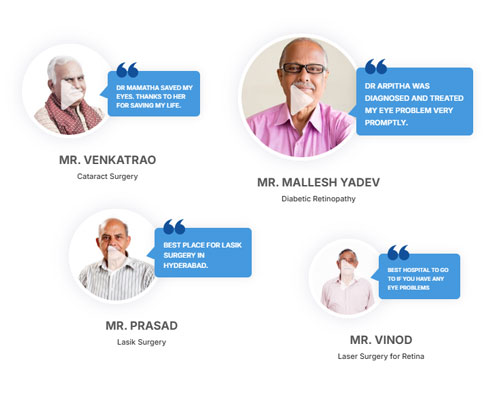
Our specialists at Thinkeye have treated over 35000+ patients and we have gained tens of thousands of loyal brand ambassadors over the decades. Listen to what our brand ambassadors have to say about our services…
I had the great experience with ThinkEye Hospitals. My father had laser cataract surgery without complication. Dr. Mamatha took good efforts to explain the procedure and everything is transparent. Friendly staff and...
I went for a second opinion to thinkeye... My initial though was to get a second opinion and go back to the first doctor for surgery. But Dr mamatha captured my trust...