+91 799 591 7995
Mon - Sat: 9:00am to 6:00pm

4th floor, ARD MAGNUM, Green Hills Road, Moosapet, Kukatpally, Hyderabad
+91 799 591 7995
Mon - Sat: 9:00am to 6:00pm
4th floor, ARD MAGNUM, Green Hills Road, Moosapet, Kukatpally, Hyderabad




Myopia is the most common eye disease. It is also known as short-sight or near-sight. In this condition, the patient cannot see distant objects such as signboards, highway signs, etc. They may appear blurred. The patient generally tends to close one eye and look, to get a partial clarity of distant objects. Myopia is corrected either through glasses or lens. In some cases, surgery is required to correct the condition.
The most common cause of myopia is the structure of the eye being too long or the cornea being too curved than usual. Hence, the focusing power of the eye becomes strong. When a patient tries to look at distant objects, the light rays fall in front of the retina and not directly into it. This causes the distant objects to appear blurred.
Myopia is also said to be hereditary. If you have someone with glasses due to myopia in your family, there are chances that you could get it too. If your eyes are stressed due to reading, writing for a long time, or working in front of a computer, there are risks of getting myopia. The contrast between indoor lighting and sunlight is a reason for the increase in the degree of myopia. Imbalance of the lighting causes strain on the eyes.
Myopia is classified into three different types according to vision severity.
The symptoms of myopia are frequent headaches while reading, writing or any other activity that requires eyes to strain, squinting to get a clear vision of distant objects, and eye fatigue while looking at objects at a distance.
The following are the ways of treatment of myopia
Myopia usually starts in childhood if it runs in families. Lens and glasses with eye drops such as cyclopentolate, pirenzepine gel, and atropine can help slow the progression of the condition.
Advanced myopia rehabilitation focuses on managing and slowing down the progression of nearsightedness, especially in children and young adults. It usually involves a combination of specially prescribed glasses, lifestyle changes and regular eye check-ups to reduce the risk of developing high-degree myopia and related complications over time.
Regular glasses or contact lenses mainly correct blurry vision so you can see clearly. Myopia rehabilitation, on the other hand, goes a step further by trying to slow down the worsening of myopia. This may include special lenses, increased outdoor activity and regular monitoring to control how the eye grows.
Parents should consider it when their child starts showing early signs of myopia, such as squinting, frequent headaches or needing stronger prescriptions in a short time. In many cases, doctors recommend starting myopia management as soon as the child is first prescribed glasses to help control progression early.
A structured plan during childhood or adolescence helps prevent high myopia, which can increase the risk of serious eye problems like retinal issues or glaucoma later in life. Waiting for LASIK doesn’t address how the eye grows during these early years, so early management provides better long-term eye health benefits.
Children and young adults with mild to moderate myopia that is steadily progressing are usually good candidates. An eye specialist will evaluate the degree of myopia, eye structure and overall health before recommending options like special glasses, atropine eye drops or lifestyle changes such as increased outdoor time.
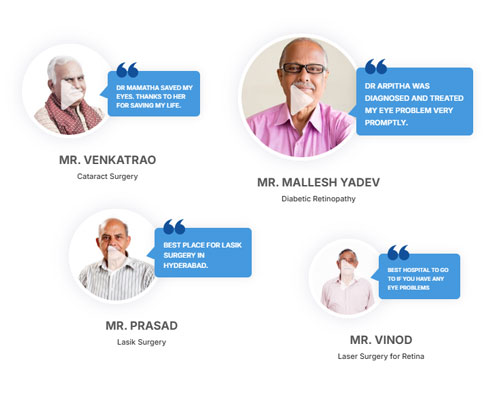
Our specialists at Thinkeye have treated over 35000+ patients and we have gained tens of thousands of loyal brand ambassadors over the decades. Listen to what our brand ambassadors have to say about our services…
I had the great experience with ThinkEye Hospitals. My father had laser cataract surgery without complication. Dr. Mamatha took good efforts to explain the procedure and everything is transparent. Friendly staff and...
I went for a second opinion to thinkeye... My initial though was to get a second opinion and go back to the first doctor for surgery. But Dr mamatha captured my trust...