+91 799 591 7995
Mon - Sat: 9:00am to 6:00pm

4th floor, ARD MAGNUM, Green Hills Road, Moosapet, Kukatpally, Hyderabad
+91 799 591 7995
Mon - Sat: 9:00am to 6:00pm
4th floor, ARD MAGNUM, Green Hills Road, Moosapet, Kukatpally, Hyderabad




In humans, coordinated functioning of both the eyes contributes to achieving a single and clear image of an object. Along with coordinated eye muscle movements, proper focusing of the lens, the correct rendering of the sensory and motor input signals in the brain, and execution of output signal in the eye, also play a crucial role.
Binocular vision disorder is a condition where both the eyes fail to act in coordination due to reasons like unequal refractive power in the eyes or muscle imbalance. The fields of the eyes do not overlap properly and give the right perception of the depth. In some cases where the eyes are misaligned, the muscles around tend to adjust, get tired and result in binocular dysfunctioning. The two common binocular vision disorders are strabismus and amblyopia.
While Ophthalmologists opine that there could be several reasons why individuals can develop binocular vision, they are yet to pinpoint the exact cause. In some individuals, it has been found that spending long hours in front of the computer, especially if there are alignment issues, increases strain to the eyes and leads to this condition.
Here are some of the signs that should give you a hint that you need to visit an ophthalmologist:
Orthoptics deals with examining and treating binocular vision disorders. It constitutes tests that check the eye muscles and verify whether both eyes focus on the same object. In case there is a binocular vision disorder, the treatment of anomalies also comes under Orthoptics.
At Think Eye, we study, diagnose and treat binocular vision disorders in both children and adults. Our experts plan out exercises and prisms to suit individual needs. Our experts detect and treat problems like aniseikonia, glare, and visual discomfort, too.
For a detailed binocular vision examination, it takes up to 1.5 to 2hours. If treatment options are also discussed, it will take more time because some more tests like corneal topography are run. Patients coming for vision therapy exercises may need an hour or more.
To draw out a treatment plan, the ophthalmologist will first try to identify the cause of the disorder. Based on what is causing the eye strain, he will recommend suitable therapies and exercises. These efforts aim at making the eyes coordinate to provide a single crystal clear vision. In some cases, spectacles can be prescribed to improve the misalignment of the eyes. It can include a refractive prescription or even a prism prescription.
Binocular vision is the ability of both eyes to work together as a team so your brain can form a single, clear image with proper depth perception. When this coordination isn’t working well, it can make everyday tasks like reading, driving or judging distances more difficult, affecting both work and daily activities.
Some common signs include double vision, blurred vision, frequent headaches or eye strain while reading. You might also notice poor depth perception or dizziness with movement. In children, signs like avoiding reading, tilting the head or squinting often may indicate a problem. In such cases, an eye specialist can evaluate for conditions like strabismus or amblyopia.
Orthoptics is a branch of eye care that focuses on improving eye coordination through non-surgical methods. It includes special tests and treatments designed to train the eye muscles and help both eyes focus on the same object. This may involve vision therapy exercises, prisms in glasses or personalized training programs to improve coordination and reduce eye strain.
Glasses mainly correct how clearly you see, but they don’t always fix how your eyes work together. Binocular vision therapy focuses on improving coordination between the eyes and the brain. This can help reduce symptoms like double vision, headaches and visual fatigue that may still occur even when wearing glasses.
Both children and adults with symptoms like double vision, lazy eye, misaligned eyes or persistent eye strain can benefit from this treatment. An eye specialist will perform a detailed assessment to determine whether exercises, prisms or other orthoptic methods can effectively improve your eye coordination.
Our specialists at Thinkeye have treated over 35000+ patients and we have gained tens of thousands of loyal brand ambassadors over the decades. Listen to what our brand ambassadors have to say about our services…
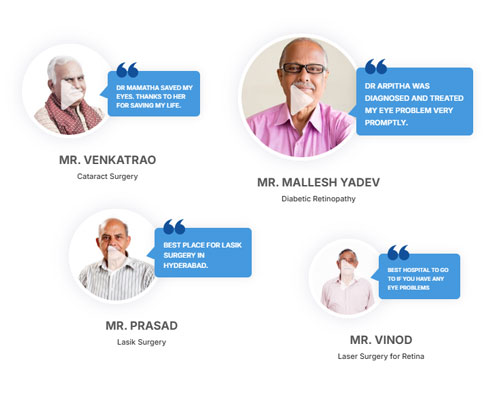
I had the great experience with ThinkEye Hospitals. My father had laser cataract surgery without complication. Dr. Mamatha took good efforts to explain the procedure and everything is transparent. Friendly staff and...
I went for a second opinion to thinkeye... My initial though was to get a second opinion and go back to the first doctor for surgery. But Dr mamatha captured my trust...