+91 799 591 7995
Mon - Sat: 9:00am to 6:00pm

4th floor, ARD MAGNUM, Green Hills Road, Moosapet, Kukatpally, Hyderabad
+91 799 591 7995
Mon - Sat: 9:00am to 6:00pm
4th floor, ARD MAGNUM, Green Hills Road, Moosapet, Kukatpally, Hyderabad




Both the cornea and lens in our eyes help us focus better. Refractive errors are eye conditions that affect the patient's vision due to the shape of the eye that prevents the light from getting focused on the retina. The condition results in the formation of blurred images. It is often attributed to the length of the eyeball or the changes in the shape of the cornea.
There are four primary types of refractive errors that affect one's vision:
The causes of refractive errors depend on the type of error you are diagnosed with. It is a myth that the overuse of eyes and vision leads to refractive errors. Some of the common causes include:
Some of the most common symptoms of RE are:
To say that RE is only age-driven is a complete lie. Anybody can be affected with refractive error issues. However, the risks increase in individuals with a family history of refractive errors. While some refractive errors are diagnosed in the early stages of life, few others like presbyopia are diagnosed in older ages.
Refractive errors are often diagnosed during your regular eye examination. The testing process usually involves the patient reading a vision chart with characters written in different size fonts. This basic examination is enough for the diagnosis. You will rarely need to undergo special imaging tests for the diagnosis of the condition.
There are predominantly three different treatment options for refractive errors. They are:
Our specialists at Thinkeye have treated over 35000+ patients and we have gained tens of thousands of loyal brand ambassadors over the decades. Listen to what our brand ambassadors have to say about our services…
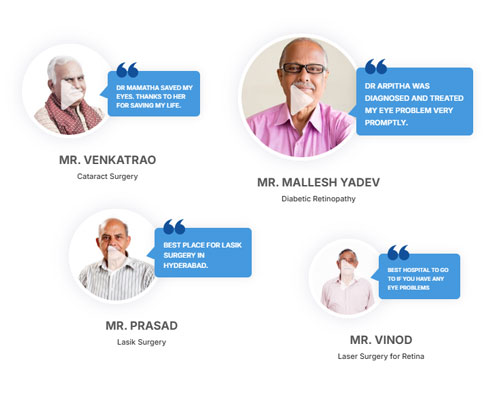
I had the great experience with ThinkEye Hospitals. My father had laser cataract surgery without complication. Dr. Mamatha took good efforts to explain the procedure and everything is transparent. Friendly staff and...
I went for a second opinion to thinkeye... My initial though was to get a second opinion and go back to the first doctor for surgery. But Dr mamatha captured my trust...